
Can a Cracked Fiberglass Tub or Shower Be Repaired? Cost, Process, and When Replacement Is Better
Yes. Many cracks, holes, chips, and weak areas in fiberglass tubs and showers can be professionally repaired without removing the entire fixture.
The important question is not simply whether the visible crack can be filled. It is whether the damaged area can be stabilized so the same movement does not cause the crack to return. A lasting repair may require reinforcing a weak floor, rebuilding damaged fiberglass, smoothing the repaired area, and refinishing the surface so it is sealed and uniform.
However, not every fiberglass fixture should be repaired. Extensive structural failure, hidden water damage, major movement, or a bathroom layout that no longer works can make replacement the better investment.
Bathroom Surface Solutions repairs and refinishes fiberglass and acrylic tubs and showers throughout Portland, the Willamette Valley, and Southwest Washington. This guide explains how we evaluate the damage, what professional repair involves, what affects the price, and when we will recommend replacement instead.
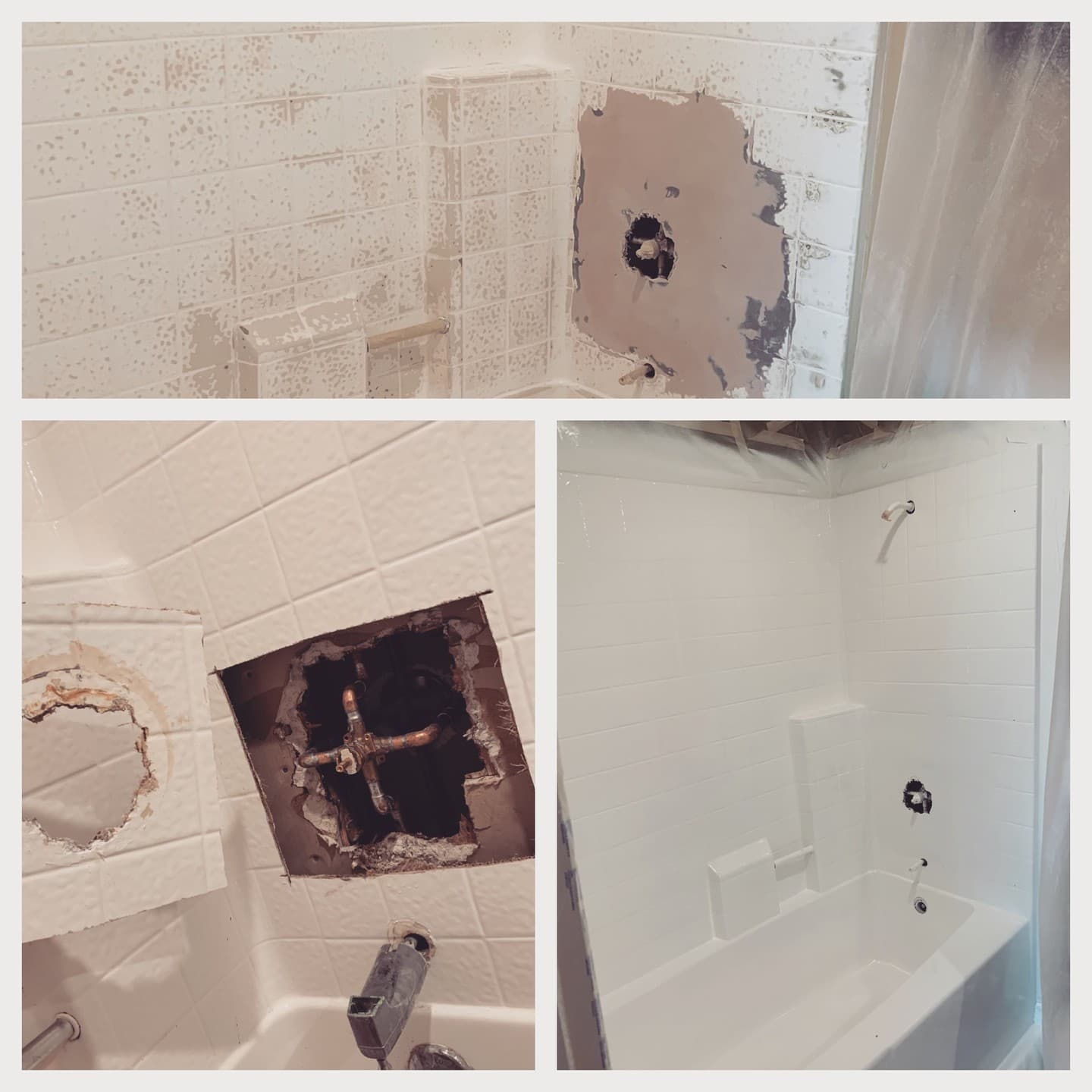
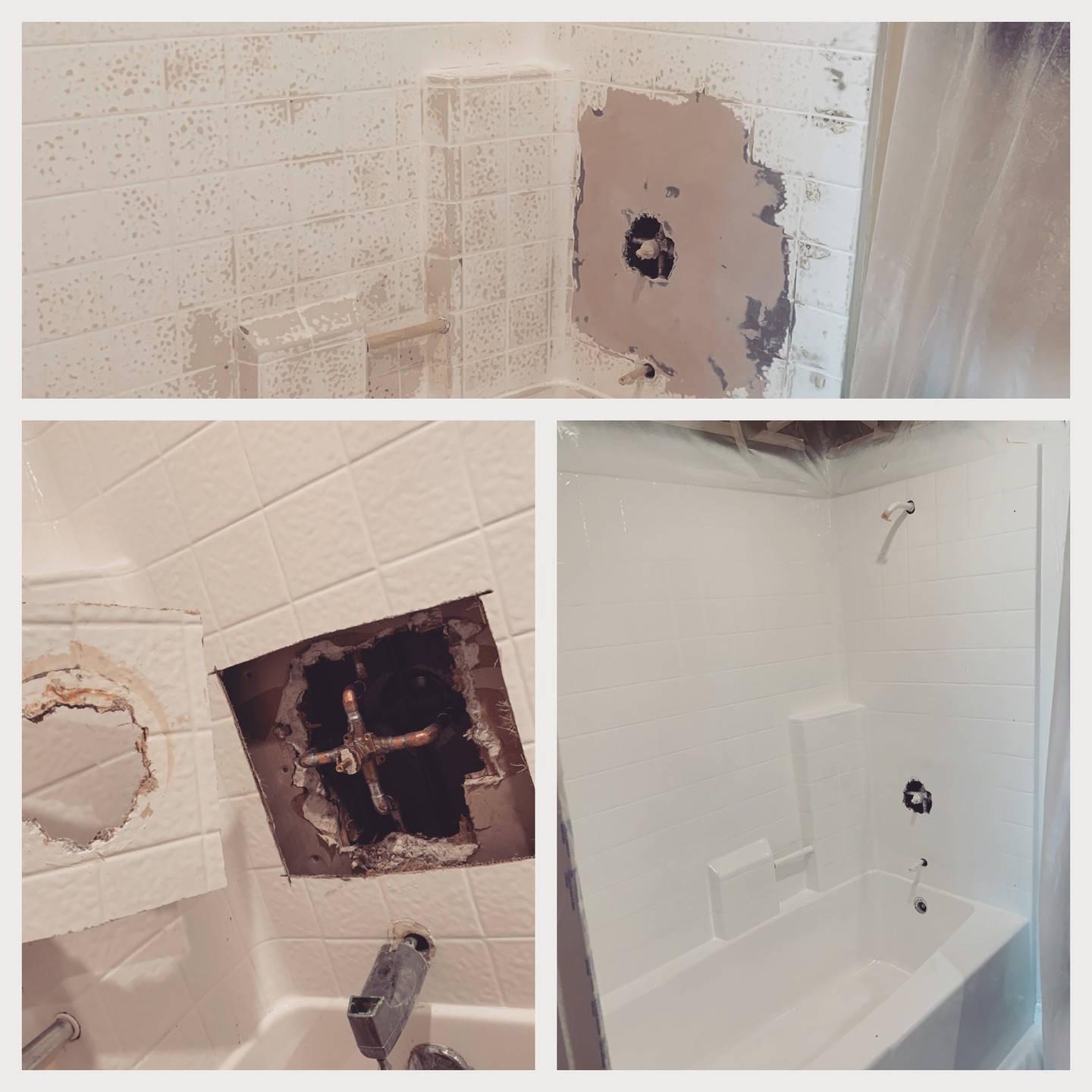
A real BSS project showing the original wall opening and floor damage, the rebuilt areas during preparation, and the fully refinished shower.
Real BSS example: major fiberglass damage repaired without replacing the shower
The project shown above is more extensive than a typical hairline crack. A large rectangular section had been removed from the fiberglass shower wall, and the shower floor also had a damaged area.
Instead of tearing out the entire enclosure, the missing and damaged sections were rebuilt. The repaired areas were then shaped and sanded to match the surrounding fiberglass before the shower was refinished as one continuous surface.
The finished photo is what a successful repair should demonstrate: the wall is visually complete, the floor has a uniform finish, and the former repair areas no longer dominate the shower. This does not mean every severely damaged enclosure can be saved, but it shows why an evaluation is worthwhile before assuming replacement is the only option.
Quick answer: Is your fiberglass tub or shower likely repairable?
This table is only a starting point. The final recommendation depends on the cause, location, and extent of the damage.
What you see or feel
Often repairable?
What needs to be evaluated
Small surface chip or scratch
Usually
Depth of damage and whether the fiberglass beneath it is exposed
Hairline crack with no movement
Often
Whether the crack is stable or continuing to spread
Localized crack from an impact
Often
Damage beneath the visible surface and access for reinforcement
Small hole or puncture
Often
Size, location, and strength of the surrounding material
Soft or spongy tub floor
Sometimes
Support beneath the fixture and the extent of weakened fiberglass
Crack that opens when stepped on
Sometimes
Movement, failed support, and possible hidden damage
Multiple large cracks across the floor
Less likely
Overall structural condition and cost compared with replacement
Major warping, extensive rot, or active water damage
Often not
Framing, subfloor, plumbing, waterproofing, and full replacement scope
The earlier a crack is assessed, the better. Continued use can allow movement and water intrusion to turn a localized repair into a larger structural problem.
Why do fiberglass tubs and showers crack?
Fiberglass and acrylic fixtures are durable, but they are not indestructible. Most failures come from impact, movement, inadequate support, age, or a combination of those factors.
Impact damage
A dropped tool, heavy bottle, shower door component, or other hard object can chip the finish or puncture the fiberglass beneath it. The visible damage may be small even when the impact has weakened a larger area.
A poorly supported floor
A tub or shower base should feel solid underfoot. If the floor flexes repeatedly, the material can fatigue and eventually crack. Filling the crack without addressing the movement is unlikely to produce a lasting result.
Normal wear and aging
Years of use can leave a fiberglass surface dull, scratched, thin, or brittle. Aging alone does not always require replacement, but widespread deterioration may change the economics of repair.
Installation or plumbing problems
An improperly supported fixture, a plumbing leak, or movement around the drain can contribute to cracking. These conditions may need to be corrected separately before the surface repair is completed.
Damage from a previous repair
A cosmetic patch or do-it-yourself kit can hide a problem temporarily without rebuilding the damaged area. If the fixture continues to move, the patch may separate or the crack may reappear nearby.
A scratch, crack, and soft floor are different problems
Homeowners often describe every damaged area as a crack, but the repair scope can be very different.
A scratch or surface chip may affect only the finish or top layer.
A stable crack may extend through the surface but have little or no movement beneath it.
A structural crack moves, spreads, or opens under weight and may require reinforcement.
A soft or spongy floor suggests that the fiberglass, its support, or both may have weakened.
A hole or puncture requires rebuilding the missing material before the area can be refinished.
That distinction matters because refinishing restores the surface, while structural repair addresses damaged or unsupported material beneath the surface. When both are needed, the repair should come first.
How professional fiberglass tub and shower repair works
The exact process varies with the fixture and damage, but a professional repair generally follows these stages.
1. Identify the material and cause
The technician first confirms whether the fixture is fiberglass, acrylic, cultured marble, porcelain, or another material. The damaged area is checked for movement, spreading, weak material, prior repairs, and signs of water intrusion.
The cause matters as much as the crack itself. If inadequate support or fixture movement caused the damage, that condition must be considered in the repair plan.
2. Remove loose or failed material
Loose finish, weak filler, and failed material from an earlier repair should not be buried under a new coating. The area must be opened and prepared until the remaining material provides a sound foundation.
3. Stabilize or rebuild the damaged area
Depending on the condition, the repair may involve reinforcing a weak area, rebuilding missing fiberglass, or restoring support beneath the floor. The goal is to create a solid repair that does not continue flexing under normal use.
4. Fill, shape, and sand the surface
After the structural work is complete, the repaired area is filled and shaped to match the surrounding tub or shower. It is then sanded smooth so the transition cannot be easily seen or felt.
5. Refinish and seal the surface
A spot repair can sometimes be color-matched, but larger repairs often look best when the full tub bottom, tub, or shower is refinished. Proper preparation and a bonded coating system create a clean, uniform finish over the repaired area.
6. Cure, recaulk, and return the fixture to service
The finish must fully cure, and required seams, edges, and drains must be recaulked before use. BSS provides project-specific instructions because cure time can vary with the surface, repair, temperature, humidity, and scope of work.
How much does fiberglass tub or shower repair cost?
There is no responsible flat price for every fiberglass crack. A stable hairline crack is a different project from a soft floor that needs reinforcement, and a close-up photo does not always reveal how much the fixture moves.
For budgeting purposes, these are BSS's current typical refinishing ranges:
Surface
Typical BSS refinishing range
Standard bathtub
$650–$1,045
Fiberglass tub-and-shower combination
$900–$1,145
Fiberglass shower
$750–$1,145
Damage repairs are priced separately when they fall outside the included standard preparation. Current BSS ballpark add-ons include:
Repair or additional preparation
Typical BSS price
Up to 10 small chips with refinishing
Included at no charge
Large chip repair
About $50
Re-sloping a low spot where water pools
About $100
Structural crack repair
$125–$350
Removing a previous coating from a fiberglass unit
$250
These prices are useful starting points, not a substitute for evaluating the fixture. A major opening, widespread floor failure, unusual access, water damage, or extensive fiberglass rebuilding can fall outside the listed amounts. BSS confirms the complete scope and fixed price before work begins.
The biggest cost factors are:
Type of damage: A chip, puncture, stable crack, and weak floor require different amounts of labor and material.
Size and location: Damage in a flat, accessible area is generally simpler than damage around a drain, curve, step, shelf, or difficult-to-reach corner.
Movement and support: A repair that requires structural reinforcement costs more than a cosmetic surface repair.
Water damage: Wet or damaged framing, subfloor, plumbing, or waterproofing may require another qualified trade or replacement.
Previous coatings or repairs: Loose coatings and failed patches must be removed before new work can bond properly.
Refinishing scope: A small color-matched repair and a complete tub-and-shower refinish are different projects.
Minor chips and ordinary imperfections may be included when a fixture is already being refinished. Your written estimate should identify exactly which repairs are included and which require additional work.
For the most accurate starting price, send BSS a wide photo of the entire fixture, close-ups of the damage, and a short video showing any movement when the area is pressed. Estimates are free.
Repair and refinish versus full replacement
The cheapest bid is not always the best decision. The goal is to choose the option that solves the actual problem.
Option
Usually makes sense when
Main tradeoffs
Localized repair
Damage is small, stable, and the surrounding finish remains in good condition
Color and gloss can be harder to blend perfectly on an aged surface
Repair plus refinishing
The damage is repairable and the fixture is also worn, stained, scratched, or outdated
Requires curing time and proper long-term care
Full replacement
Damage is extensive, the fixture or surrounding structure has failed, or the owner wants a new size, layout, or accessibility feature
Demolition, plumbing, finish work, more downtime, and typically much higher total cost
Replacement involves more than buying a new tub or shower. Removal can disturb plumbing, wall panels, tile, flooring, trim, and waterproofing. Repair and refinishing preserve the existing footprint and can avoid much of that demolition when the fixture is a sound candidate.
On the other hand, saving the existing fixture is not a bargain if hidden damage will remain or if the bathroom already needs a larger remodel.
When repair is usually the smart choice
Professional repair is worth considering when:
The damage is localized rather than widespread.
The fixture can be made solid and properly supported.
There is no unresolved plumbing leak or major hidden water damage.
The surrounding bathroom is in good condition.
You want to avoid demolition and preserve the existing layout.
The tub or shower fits your household's needs.
You need a faster turnaround for a home, rental, apartment, hotel, or commercial property.
These projects often provide the best value because they preserve the expensive parts of the bathroom that still work.
When replacement is probably better
BSS sells repair and refinishing, but we will not claim it is the right solution for every fixture. Replacement may be the more responsible choice when:
The floor has extensive movement that cannot be adequately stabilized.
Large cracks run through multiple areas or continue returning.
The fixture is badly warped, brittle, or deteriorated throughout.
Water has damaged the subfloor, framing, drywall, or surrounding finishes.
A plumbing or drain problem requires opening the area anyway.
You want to change the bathroom layout, tub size, or shower footprint.
You need a lower entry, walk-in shower, or another accessibility improvement.
A full bathroom remodel is already planned soon.
In those cases, putting money into a cosmetic repair can delay the larger project without solving the underlying issue.
Can you repair a fiberglass tub yourself?
Small do-it-yourself kits can improve the appearance of a shallow chip or scratch. They are much less reliable for damage involving movement, a soft floor, a deep crack, or a hole.
The most common DIY mistake is treating a structural problem like a paint problem. Filling the visible line may hide it temporarily, but the crack can reopen if the fixture still flexes. Poorly bonded fillers and mismatched coatings can also make the eventual professional repair more labor-intensive.
Before attempting a repair, press gently around the damaged area. If it moves, feels soft, makes noise, leaks, or has already been patched once, it should be professionally evaluated.
How long does a professional fiberglass repair last?
A properly completed repair can provide many years of service when the fixture is a suitable candidate, the underlying cause has been addressed, and the surface is cared for correctly.
Longevity depends on:
The extent and location of the original damage.
Whether movement and inadequate support were corrected.
The quality of the preparation and repair materials.
Whether the coating was allowed to cure fully before use.
Proper caulking and prompt repair of plumbing leaks.
Cleaning with mild, non-abrasive products.
Most qualifying BSS projects are backed by a written 10-year warranty. Exact coverage, exclusions, repair-specific terms, and care requirements are provided with the estimate so you can review them before work begins.
What to send with your estimate request
Good photos can often determine whether an on-site evaluation is needed. Send:
One photo showing the entire tub or shower.
Close-ups from several angles around each crack, hole, or chip.
A photo of the drain and surrounding floor.
Photos of any staining, peeling, failed patch, or previous coating.
A short video showing whether the area flexes when gently pressed.
A note describing any leak, movement, noise, or change over time.
Do not continue pressing or using the fixture if the damage appears severe or water is escaping into the surrounding structure.
Frequently asked questions
Can a crack in the bottom of a fiberglass tub be repaired?
Often, yes. The area must be evaluated for movement and support. If the tub bottom flexes, a durable repair may require reinforcement before the crack is rebuilt and refinished.
Can a soft or spongy shower floor be repaired?
Sometimes. A soft floor can indicate weakened fiberglass, inadequate support, or damage beneath the fixture. The repair must address the reason for the movement, not simply cover the surface.
Can you repair a hole in a fiberglass tub or shower?
Many localized holes can be rebuilt and refinished. Repairability depends on the hole's size, location, surrounding material, and whether the fixture remains structurally stable.
Will the repaired area be visible?
A professionally shaped and refinished repair should blend closely with the surrounding surface. Refinishing the full tub bottom or fixture usually produces a more uniform color and gloss than a small spot repair on an aged surface.
Does a crack mean the tub is leaking?
Not always, but it should be evaluated promptly. A crack that penetrates the fixture can allow water into the area below or behind it, even if the leak is not yet visible from the bathroom.
How long does the work take?
Many BSS refinishing projects are completed on-site in about a day, although significant repairs may require additional time. The fixture cannot be used until the coating has cured and required caulking is complete. BSS provides exact instructions for each project.
Does fiberglass repair include a warranty?
Most qualifying BSS projects receive a written 10-year warranty. Coverage can vary with the repair and project type, so the exact terms, exclusions, and care requirements are provided with the estimate.
Do you repair fiberglass tubs and showers outside Portland?
Yes. Bathroom Surface Solutions serves Portland, Beaverton, Hillsboro, Tigard, Lake Oswego, Salem, Eugene, Corvallis, Albany, Vancouver, Camas, and surrounding communities across Oregon and Southwest Washington.
The bottom line
A cracked fiberglass tub or shower does not automatically need to be torn out. Localized cracks, chips, holes, and even some soft floors can often be repaired, reinforced, and refinished for far less disruption than replacement.
The deciding factor is whether the underlying fixture can be made solid. A coating alone cannot correct major movement, hidden water damage, failing plumbing, or a bathroom layout that no longer meets your needs.
Bathroom Surface Solutions has repaired and refinished tubs and showers since 1979. We are licensed, bonded, and insured in Oregon and Washington, with more than 500 five-star reviews and a written 10-year warranty on most qualifying projects.
Send us photos of the complete fixture and the damaged area for a free, honest evaluation. We will tell you whether repair and refinishing make sense or whether your money is better spent on replacement.
Request a free photo estimate or call 503-227-0826.