Bathroom Resurfacing vs Refinishing: What Is the Difference?
The short answer
There is no difference. Bathroom resurfacing, bathroom refinishing and reglazing all describe the same service: a technician repairs, prepares and bonds a new coating system onto your existing tub, shower or tile. Most projects finish in about a day and cost a fraction of replacement.
Published Last reviewed
If you searched for bathroom resurfacing and landed on sites talking about refinishing, or the other way around, you are not missing anything. The trade uses three words for one service, and that mix of vocabulary makes comparing companies harder than it should be. This guide clears up the terms, then walks through what the work actually involves, so you can compare quotes on process instead of wording.
Are resurfacing, refinishing and reglazing the same thing?
Yes. All three describe the same job: an existing bathtub, shower, tile surround or countertop is cleaned, repaired and prepared, then sprayed with a bonded coating system that becomes its new surface. No demolition, no new fixture, no plumbing work. Companies pick the word their customers use most. Around Portland and Vancouver, resurfacing and refinishing are the two you will hear most, with reglazing close behind.
| Term | What it means | Same process? |
|---|---|---|
| Resurfacing | A new surface is bonded over the existing fixture | Yes |
| Refinishing | The existing finish is renewed with a new coating system | Yes |
| Reglazing | Trade shorthand for the same coating process on tubs and tile | Yes |
What actually happens during a bathroom resurfacing job?
The word may vary, but a proper job always follows the same sequence. On our bathtub refinishing and resurfacing projects it looks like this:
- Deep-clean the surface and remove old caulk, soap scum and mineral deposits
- Repair chips, cracks, scratches and weak spots in the fixture
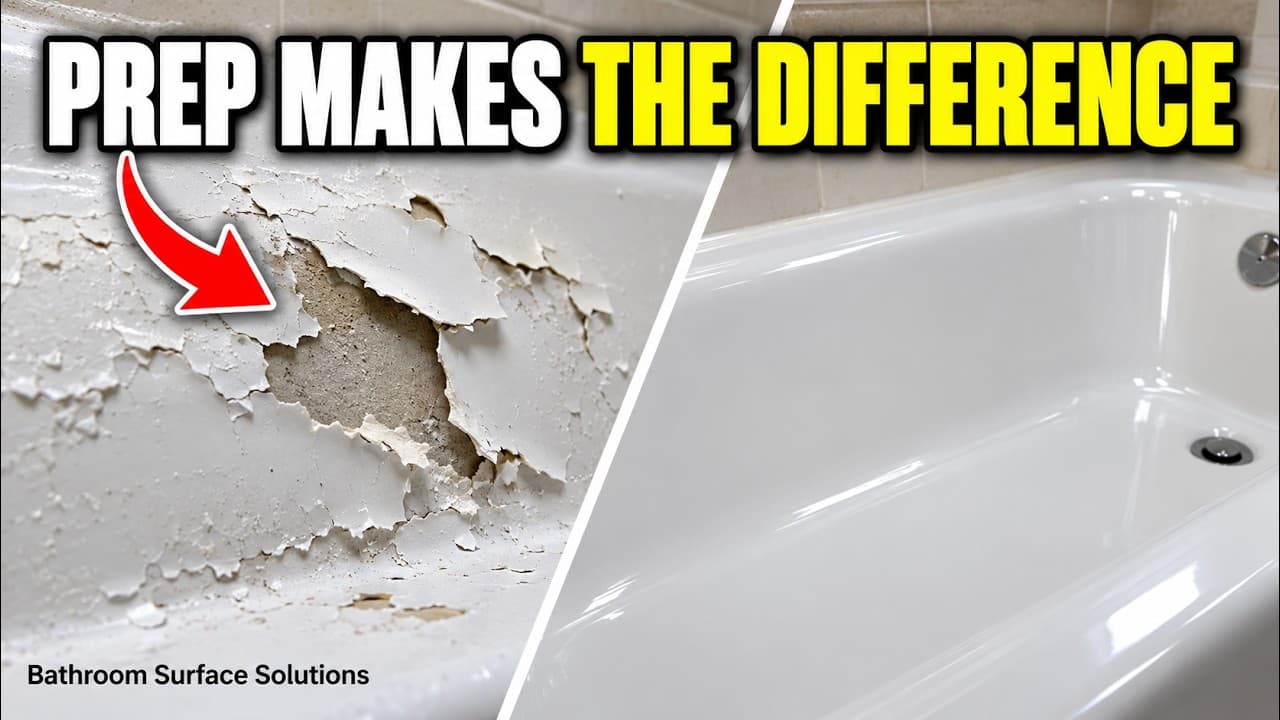
- Prepare the surface profile so the new coating bonds permanently
- Mask the room and set up ventilation before any spraying starts
- Apply a high-bond epoxy primer in multiple coats
- Apply an acrylic urethane topcoat with a built-in clear coat
- Let the finish cure; most fixtures are ready to use in about 12 hours
The same approach applies to tile and shower refinishing, where grout lines are repaired and then sealed under the same finish as the tile itself.
Is it paint, or a new tub?
Neither. The coating system is closer to the finish applied at the factory than to anything from a paint aisle: a high-build epoxy primer for adhesion, then an acrylic urethane topcoat sprayed in multiple coats. Done right, an untrained eye cannot tell a resurfaced tub from a new one. What it is not is a drop-in liner or a new fixture, which is why it costs a fraction of replacement and finishes in about a day.
Why do companies use different words for it?
Mostly habit and regional preference. Refinishing has been the common trade term for decades, reglazing spread from the tub industry, and resurfacing is simply what a lot of homeowners type into Google. The vocabulary tells you nothing about quality. The process does. Two companies can both advertise bathroom surface refinishing and deliver very different results, depending on how they prepare the surface and what coatings they spray.
How should you compare quotes if everyone calls it something else?
Ignore the label and ask about the work. How is the surface prepared? What primer and topcoat will be sprayed, and how many coats? Are chip and crack repairs included? Is there a written warranty, and for how long? A company that answers those questions clearly is a safer bet than one with the fanciest terminology. Our guide on why prep and adhesion matter shows the standard to hold any quote against.
Have a tub, shower or tile surround you want resurfaced in Portland, Vancouver or the Willamette Valley? Get a free estimate and we will tell you exactly what your fixture needs.
Frequently asked questions
Yes. Resurfacing, refinishing and reglazing are three names for the same process: repairing and preparing the existing surface, then bonding a new coating system onto it. The wording changes by company, the work does not.
Refinishing a bathtub with Bathroom Surface Solutions starts as low as $650, while a full replacement averages over $3,000 nationally once demolition, plumbing and tile work are included. Most resurfacing projects also finish in about a day instead of a week.
With proper surface preparation and quality coatings, a resurfaced tub or tile surround provides many years of daily use. Most of our projects are backed by a written 10-year warranty, and care is simple: mild, non-abrasive cleaners only.
Yes. The same process works on shower stalls, tile surrounds, bathroom sinks, vanities and countertops. Chips, cracks and damaged grout are repaired as part of the job before any coating goes on.